

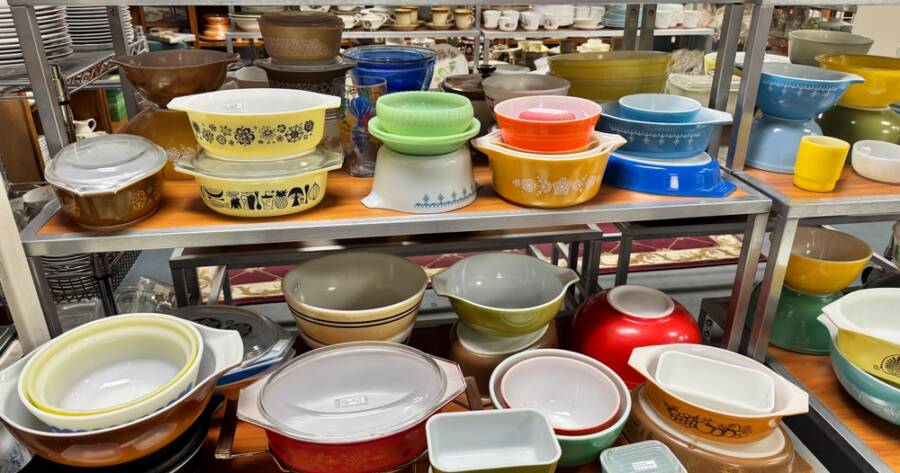
A dusty casserole dish or colorful stack of bowls can be easy to overlook at an estate sale, especially when it looks like something pulled straight from a grandmother’s kitchen. But mid-century dishware has developed a devoted collector following, and certain pieces from the 1950s deserve a much closer look before they’re donated, discarded, or sold for a few dollars.
Why 1950s Dishware Has Become So Collectible
The post-war era produced some of the most distinctive and durable kitchen items ever made. Manufacturers experimented with new materials, bold patterns, and modern aesthetics that perfectly captured the optimism of the atomic age. Decades later, those same qualities (unusual designs, limited production runs, and nostalgic appeal) are precisely what drives collector demand today.
Estate sales routinely see kitchen sections picked clean within the first hour, and dedicated collector communities on social media have grown to hundreds of thousands of members (source). What once sat forgotten on a shelf can now command surprisingly high prices at auction, depending on the brand, pattern, and condition of the piece.
The Five Factors That Determine Value
Not every piece of vintage dishware is worth a small fortune, but understanding what separates a common thrift store find from a genuine collectible makes all the difference. Appraisers and experienced collectors consistently point to five key factors when evaluating 1950s kitchen items: brand, rarity, pattern, age, and condition (source).
Condition matters enormously. Chips, cracks, heavy scratching, or faded color can dramatically reduce what a buyer will pay. Original lids for casserole dishes, sugar bowls, and teapots add significant value, as covered serving pieces consistently earn the highest premiums in this market (source). Rarity plays an equally powerful role — a pattern produced for only a few years will always outperform a widely distributed one when it comes to resale.
CorningWare: Space Age Design Meets Serious Value
CorningWare first appeared in 1958, built from Pyroceram — a glass-ceramic material engineered to be nearly indestructible and capable of moving directly from freezer to oven, stovetop, or broiler without cracking (source). That engineering feat, combined with distinctive visual design, made CorningWare one of the most beloved kitchen brands of the era.
The original blue cornflower pattern launched alongside the brand and remains highly recognizable. Late-1950s casserole dishes in this pattern regularly appear listed for around $1,000, with rare examples achieving sales as high as $2,500 on eBay (source). Perhaps even more sought after is the Starburst pattern, produced only in the late 1950s and early 1960s. Inspired by the era’s Space Race obsession, it featured dramatic blue, black, and platinum geometric designs that look unlike anything made before or since (source).
Pyrex: When a Single Dish Sells for Thousands
Lucky in Love, a rare 1959 Pyrex casserole pattern believed to have been produced as a test piece or limited release, ranks among the most valuable designs sought by collectors. The Corning Museum of Glass notes that examples have sold for more than $4,000, while more recent collector reporting has documented sales reaching five figures (source)
Certain Pyrex patterns carry high value because of how few pieces survive in good condition. The Turquoise Diamond pattern, sold exclusively through Dainty Maid stores between 1958 and 1959, is particularly hard to find, with individual pieces fetching $100–$150 and juice carafes listed at around $160 (source). Limited retail distribution during the original production period means fewer pieces entered circulation, making intact survivors genuinely rare decades later.
Fiestaware and Franciscan: Color, Pattern, and Collector Passion
Fiestaware has developed one of the most dedicated collector followings of any American dishware brand. Authentication matters deeply in this market — genuine vintage pieces carry an ink stamp reading “GENUINE fiesta” on the bottom, and the base should be fully glazed to match the rest of the dish, distinguishing originals from later reproductions (source).
Color is the single biggest driver of Fiestaware value. The Medium Green hue, manufactured only between 1959 and 1969, stands as the rarest and most desirable color in the entire lineup (source). Beyond individual pieces, complete vintage nesting bowl sets — originally designed with seven graduating bowls that stack inside one another — now list for $500 to $1,000, with some recent sales exceeding $1,100 (source). The iconic disc water pitcher also commands strong prices, ranging from $200 to $600 depending on color (source).
Franciscan’s Starburst pattern, introduced in 1954, brings similar collector enthusiasm. Featuring vivid blue and green starburst motifs across a creamy speckled background, a complete 60-piece set sold on eBay for over $1,288 (source). Mid-century pattern design at this level of visual boldness rarely survived the following decades undamaged, which is exactly why complete sets attract premium bids.
Safety Considerations for Collectors and Buyers
Anyone acquiring vintage dishware produced before the late 1970s should be aware of one important safety issue. Lead-based paint was not officially prohibited until 1978, which means collectors should use a lead testing kit on any pre-1978 piece and pay particular attention to stamped designs, metallic rim details, and hand-painted decorations (source). This is especially relevant for items intended for daily kitchen use rather than display. Display collectors may prioritize visual condition, but those planning any food-related use should test pieces carefully before use.
Why You Should Learn More About 1950s Kitchen Collectibles
The vintage dishware market rewards patient, knowledgeable collectors who understand what makes certain pieces genuinely rare. A Pyrex pattern sold through a single retailer for seven years, a CorningWare casserole from the brand’s debut year, or a complete Fiestaware set in Medium Green — these are not random curiosities. They are artifacts of American manufacturing and design history that the collector community has recognized as worth preserving and pursuing.
Understanding the brands, patterns, production timelines, and condition standards that matter most transforms casual browsing into informed collecting. Whether evaluating items already in the home or scanning estate sales with fresh eyes, knowing the difference between a common piece and a rare one can make an extraordinary difference in value.