

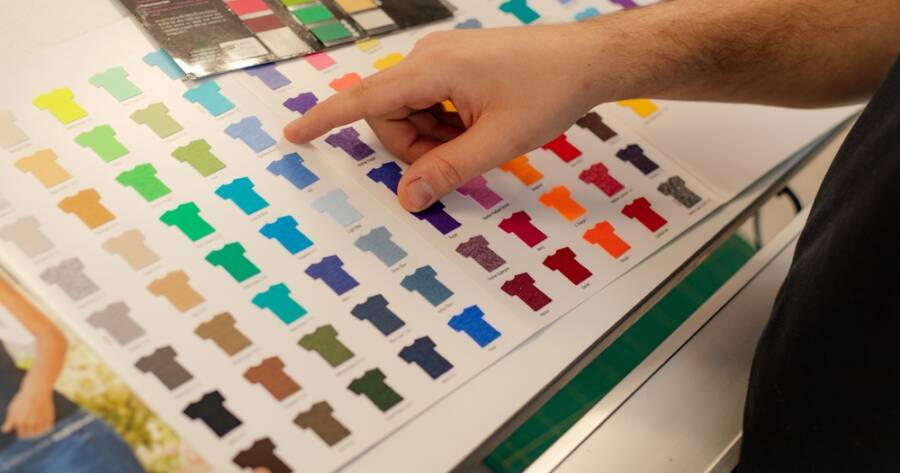
Graphic t-shirts have always been more than everyday clothing, reflecting everything from pop culture to personal identity. As the market moves toward 2030, changing shopping habits, new production methods, and evolving consumer tastes are giving the category fresh momentum. The next few years could reshape not only how graphic tees are created, but also how people choose and buy them.
A Market That Is Growing Faster Than Most Expect
The t-shirt industry as a whole is already a massive commercial force, and it continues to expand at a steady pace. The global t-shirt market carries a valuation in the billions of dollars and is expected to climb considerably higher before the decade closes (source). That growth, however, is not evenly distributed across the industry. Certain segments are pulling far ahead of the pack.
The graphic-designed T-shirt category stands out as one of the most dynamic corners of the apparel world. Valued at roughly $2.68 billion in 2024, that segment is projected to reach over $4 billion by 2030 (source). That kind of trajectory demands attention from designers, retailers, and consumers alike.
Custom Printing Is Becoming the New Standard
One of the biggest forces driving the graphic tee market toward 2030 is the explosion of custom printing. The custom t-shirt printing segment was valued at over $5 billion in 2024, and analysts project it will nearly double by 2030 (source). That trajectory signals a fundamental shift in how people think about what they wear.
Within the custom space, the artwork segment — defined by fully individualized, purpose-built design — is expanding faster than any other category. It carries one of the highest compound annual growth rates in the entire printing market through 2030 (source). The implication is clear: consumers are moving away from generic, off-the-shelf options and toward apparel that tells a more personal story.
Digital printing technology is central to this shift. Advances in the field have reduced production costs and made short-run customization economically viable for smaller brands and independent creators (source). What once required expensive minimum orders from large manufacturers can now be produced efficiently at a fraction of the former scale. That accessibility is opening doors that were previously closed to all but the largest players.
Personalization, Culture, and the Casualization of Fashion
The rise of graphic tees is not purely a technology story. Cultural forces are equally responsible for the category’s momentum. Dress codes have softened dramatically across workplaces, social settings, and even some formal contexts around the world. Graphic tees have evolved from subcultural symbols into mainstream wardrobe staples that span age groups and demographics.
Personalization is the keyword shaping consumer expectations heading into the latter half of the decade. Shoppers increasingly want apparel that reflects their individual identity, values, and aesthetic sensibilities and the graphic T-shirt is uniquely positioned to deliver on that desire. The strong consumer appetite for visually expressive clothing is one of the core forces sustaining the market’s upward momentum (source).
Digital Shopping and Social Media Are Setting the Agenda
How people discover and purchase graphic tees is changing just as rapidly as what they are buying. In the United States, more than 61% of T-shirt purchases now happen through digital channels (source). Physical retail still exists, but the transaction increasingly begins — and ends — online.
Social media plays an outsized role in shaping purchasing decisions. Nearly 46% of buying choices in the U.S. t-shirt market are influenced by social platforms, which represents the highest rate of any major market globally (source). That dynamic has enormous implications for how brands and designers promote graphic tees. A single viral post can turn an independent artist’s design into a sought-after item overnight. The feedback loop between social content and consumer purchasing behavior is becoming faster and more direct with each passing year.
The growing dominance of eCommerce platforms also benefits consumers by providing access to a wider range of independent designers and niche aesthetics than any single physical store could stock (source). Discovery is now global, and the American consumer has more options than at any point in the history of fashion.
What 2030 Looks Like for Graphic Tees
Piecing together the trends, the graphic t-shirt of 2030 will likely be defined by a higher degree of individual expression, produced through more accessible and affordable digital methods, and sold primarily through online platforms shaped heavily by social media influence. The mass-produced, one-size-fits-all graphic tee will not disappear, but it will share more of the market with highly customized, short-run designs created by independent artists and small-batch brands.
The economic data supports this vision. A custom printing market that is on pace to nearly double in size by 2030, combined with a graphic tee segment growing steadily toward the $4 billion mark, points to an industry reconfiguring itself around consumer choice and individual identity rather than volume and uniformity (source) (source).
Why You Should Learn More About Graphic T-Shirt Trends Today
For anyone following fashion, retail, or design, the graphic T-shirt market represents one of the most telling windows into where consumer culture is heading. The convergence of digital printing, personalization demand, eCommerce growth, and social media influence has created a category unlike any other in apparel.
Whether someone is a designer considering a new venture, a retailer planning future inventory, or simply a consumer who wants to understand why their favorite tee has become a cultural artifact, the forces shaping this space through 2030 are worth understanding. The numbers point to a market growing in both size and sophistication, and the story of what people choose to wear on their chests remains one of the most honest reflections of who they are and what they value.