

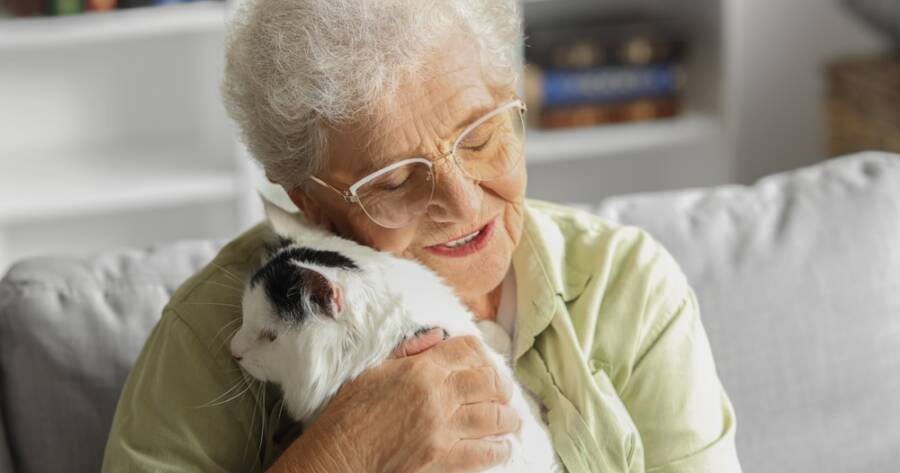
The right companion animal can bring affection, routine, and a comforting presence to everyday life. For older adults, however, a good match should also fit mobility, finances, living space, and available support. Adult cats, calm older dogs, fish, and certain small birds may be easier to manage than younger or highly active pets, depending on individual circumstances.
The Health Benefits of Pets for Seniors
Pets can offer more than companionship. Research suggests that living with an animal may support emotional, physical, and social well-being, although the benefits vary according to a person’s health, lifestyle, and ability to provide appropriate care. Pets may also encourage social interaction and help some people feel less isolated or lonely (source).
The CDC also notes associations between human-animal interaction and benefits such as reduced loneliness and more opportunities for physical activity and time outdoors (source). For seniors who enjoy animals, feeding, playing, grooming, or walking a pet can also introduce a predictable routine into the day.
Adult Cats Can Offer Quiet Companionship
An adult cat can be a practical choice for someone who wants an affectionate companion without daily outdoor walks. Cats can live comfortably in smaller homes and apartments, and an adult animal’s personality and activity level are generally easier to assess before adoption than those of a young kitten. The American Humane Society specifically notes that cats may suit people with limited mobility or those who prefer a quieter pet (source).
Older cats can also appeal to seniors seeking a calmer household. They still need daily feeding, fresh water, play, litter-box cleaning, veterinary care, and enrichment, but they may require less intensive supervision and training than kittens.
Calm Adult or Senior Dogs May Be a Better Match
Dogs can provide close companionship and encourage regular movement, but temperament and energy level matter considerably. A calm adult or senior dog may fit an older owner’s routine better than a high-energy puppy. The American Humane Society notes that mature dogs and cats often have more settled personalities and may require less training than younger animals (source).
Size alone shouldn’t determine the choice. Some small dogs are highly energetic, while larger older dogs can be surprisingly relaxed. Seniors should consider walking requirements, strength on a leash, grooming, stairs, veterinary transportation, and whether someone can help with care during illness or travel.
Fish and Small Birds Suit Different Lifestyles
Fish can provide a quiet presence without walks, grooming, or direct physical handling. They may work well for someone who enjoys watching animals but doesn’t want a pet moving around the home. That said, an aquarium still requires regular feeding, water-quality management, cleaning, and equipment maintenance, so fish shouldn’t be considered maintenance-free.
Small companion birds can provide more social interaction, but they need more engagement than many people expect. Birds require appropriate housing, cleaning, enrichment, a suitable diet, and regular attention. The ASPCA emphasizes that daily interaction and enrichment are important parts of companion bird care (source). A bird may therefore work best for someone who wants an interactive pet and has time for daily care.
No Companion Animal Is Truly Low Effort
Even an easygoing pet requires a long-term commitment. Food, cleaning, enrichment, veterinary visits, medication, emergency expenses, and arrangements for travel or hospitalization should all be considered before adoption. Regular veterinary care is important throughout an animal’s life (source).
Health and safety matter as well. The CDC notes that adults over 65 can be more vulnerable to illnesses carried by animals and advises people in that age group to avoid contact with certain animals, including rodents, reptiles, amphibians, and poultry (source). Choosing a pet should therefore involve both lifestyle preferences and personal health considerations.
Finding the Right Companion for Everyday Life
There isn’t one perfect pet for every older adult. An adult cat may suit someone who values independence and quiet companionship, while a calm dog can offer closer interaction and opportunities to stay active. Fish may appeal to people seeking a peaceful animal presence, while small birds can suit those who enjoy more frequent engagement.
The best choice is an animal whose needs comfortably match the owner’s abilities, home, budget, and support system. Planning for daily care and future needs helps create a relationship that’s manageable for the owner while giving the animal the consistent attention and care it deserves.