

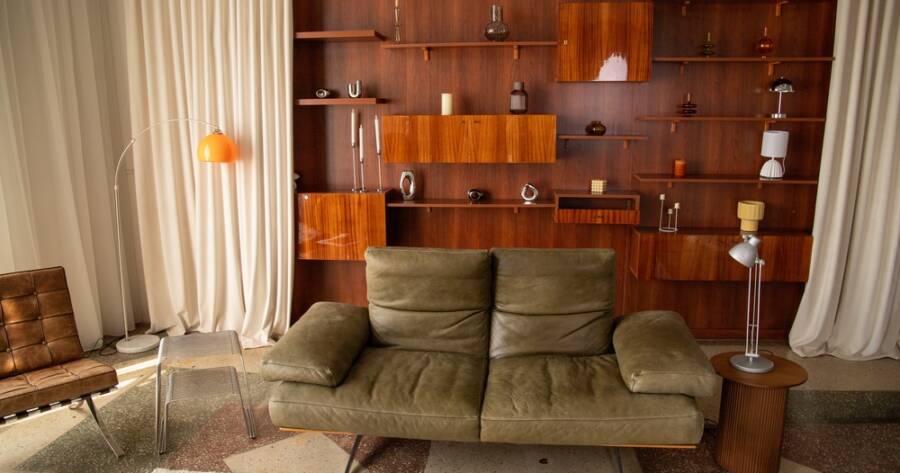
Vintage lamps from the 1960s can range from inexpensive decorative pieces to sought-after examples of mid-century design. Telling them apart takes more than recognizing a retro shape or aged finish. Maker labels, materials, construction, original parts, condition, and documented sales can all provide clues about when a lamp was produced and how much collectors may be willing to pay.
Start With Maker Labels and Construction Details
The best place to begin is with the lamp itself. Check the underside of the base, inside or beneath the shade, around the socket, and along the neck for labels, stamps, engraved names, model numbers, or other markings. A clear manufacturer’s label can make researching the piece considerably easier. Even partial markings may be useful when compared with documented examples from the same maker (source).
Don’t rely on one feature alone. Authenticity is usually established by examining a combination of materials, construction methods, hardware, labels, wear, and documentation. Modern reproductions can imitate the overall appearance of vintage designs, so matching the small details against reliable examples is important when a lamp is attributed to a recognized designer or manufacturer (source).
Look for Materials and Forms Associated With the Period
Many 1960s lamps reflect the broader mid-century interest in simple geometry, sculptural forms, and new combinations of materials. Globe, hourglass, cylindrical, and other streamlined shapes are common clues, although design alone cannot prove a lamp’s age. Mid-century lamps may combine materials such as brass, aluminum, plastic, ceramic, glass, and wood (source).
Documented examples show how varied the decade could be. Gerald Thurston designs for Lightolier used materials such as brass and molded plastic, while lamps by Jane and Gordon Martz for Marshall Studios combined glazed ceramic with teak details (source, source). Comparing an unknown lamp with well-documented period examples can help narrow down its likely age, maker, and style.
Check What Is Original and What Has Been Changed
Original parts can matter to collectors, particularly when they help establish that a lamp matches a known design. Look closely at the shade, finial, base, switches, sockets, hardware, and other fittings. A replacement shade or updated electrical component does not automatically make a lamp undesirable, but it should be taken into account when comparing it with fully original examples. Documented vintage listings often specifically note when original shades, labels, or fittings remain intact (source).
Condition matters as well. Cracks in ceramic or glass, missing hardware, heavy corrosion, repainting, or substantial alterations can affect collector interest. Normal wear and patina may be acceptable, especially when consistent with age, but artificial aging should not be mistaken for proof of authenticity. For electrical safety, inspect old cords for cracking, stiffness, fraying, or other deterioration and have questionable wiring evaluated before putting a vintage lamp into regular use (source).
Research the Maker Before Estimating Value
A recognizable designer or manufacturer can make a major difference in value, but the name alone is not enough. Determine whether the label, materials, dimensions, and construction actually correspond with documented work by that maker. Some highly copied mid-century designs require especially careful authentication, making provenance, photographs of labels, and comparison with known examples particularly useful (source).
If the lamp is unmarked, research its distinctive characteristics rather than immediately assigning a famous designer’s name to it. Search for combinations such as material, shape, switch design, country of origin, and approximate dimensions. An experienced dealer or qualified appraiser may be useful when a lamp appears unusual, valuable, or difficult to identify (source).
Use Sold Prices to Estimate What a Lamp May Be Worth
Once you have a likely maker and model, look for completed sales of comparable lamps, not simply current asking prices. LiveAuctioneers maintains a searchable database containing millions of auction results, including vintage and mid-century lighting. Searches can be narrowed by creator, material, style, period, and other characteristics, making the database useful for comparing a lamp with examples that have actually reached the auction market (source).
Try to compare pieces as closely as possible. A pair of lamps may sell differently from a single example, while an original shade, documented attribution, rare finish, or unusually good condition can affect the result. Auction prices can also change over time, so several recent comparable sales are more useful than one unusually high or low result. If the potential value appears significant, a professional appraisal can provide a more detailed assessment.
A Careful Inspection Can Reveal the Real Story
Identifying a 1960s lamp is usually a process of gathering evidence rather than relying on one visual clue. Start with labels and markings, study the materials and construction, compare the lamp with documented period examples, and note which components appear original. Those steps can help separate an authentic mid-century piece from a later lamp made in a similar style.
Value is equally dependent on context. Maker, rarity, condition, originality, provenance, and current collector demand all influence what a lamp might bring on the market. Researching actual auction results before assigning a price provides a much stronger foundation than relying on age alone or assuming that anything labeled “mid-century” is automatically valuable.