

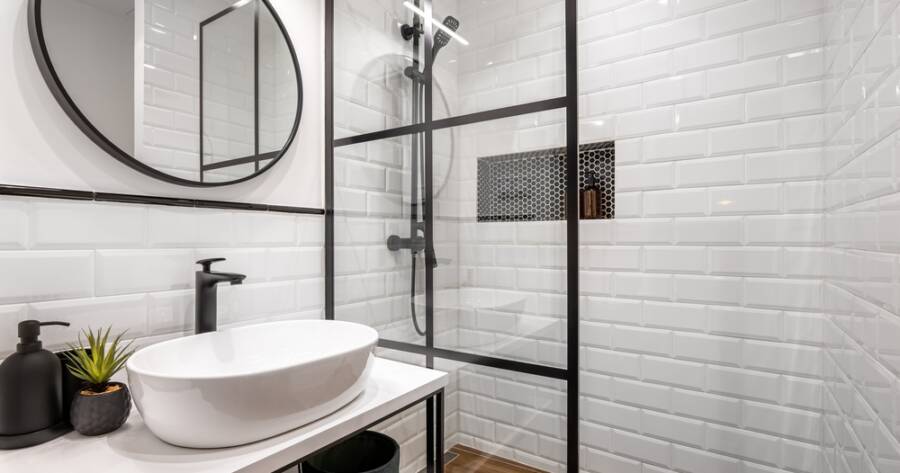
A bathroom can feel dated surprisingly quickly when one bulky feature dominates the room. Traditional shower doors still work, but homeowners now have more ways to create a cleaner, more open look without sacrificing function. From flexible enclosures to nearly barrier-free layouts, modern shower designs are giving remodelers fresh options for balancing style, space, maintenance, and accessibility.
Why Homeowners Are Moving Away from Traditional Shower Doors
For decades, the hinged or sliding glass shower door was considered a bathroom staple. Yet as design trends shift toward cleaner lines and more open spaces, many homeowners are reconsidering this standard fixture. Open shower designs are becoming a more visible choice in bathroom remodels, especially as homeowners experiment with layouts and finishes that make the space feel less enclosed and more integrated with the rest of the room (source).
Beyond aesthetics, practicality plays a major role. Framed and sliding shower doors can also require extra maintenance because tracks, channels, and other hardware may collect soap residue and mineral buildup over time (source). When homeowners weigh the long-term upkeep of framed glass against sleeker, easier-to-clean options, the appeal of alternatives becomes clear. Many who have made the switch report that the change inspired broader bathroom renovations, reshaping how the entire space is used and experienced (source).
The Rise of the Walk-In Shower
Walk-in showers have become one of the most sought-after bathroom upgrades in recent years. One of their most practical advantages is ease of access. Walk-in showers can make access easier by reducing or eliminating the need to step over the high side of a bathtub, an advantage that can be especially useful for people with mobility concerns (source). This feature makes them especially valuable for aging homeowners or anyone prioritizing accessible design.
Some walk-in showers use a completely open layout, relying on the design of the shower area rather than a full glass enclosure to separate the wet zone from the rest of the bathroom (source). Open shower layouts can be designed with more than one showerhead, while a carefully sloped floor helps channel water toward the drain without requiring a conventional door or curtain (source). The result is a bathroom that feels more like a spa retreat than a utilitarian space.
For smaller bathrooms, doorless designs offer another key benefit. Removing the door from the equation visually expands the space, making the shower area appear less confined, and the overall bathroom feel larger and less cluttered (source). This makes the trend appealing not just to those with spacious bathrooms, but also to city dwellers and homeowners working with compact floor plans.
Stylish Alternatives to the Traditional Glass Door
For those who want some water containment without committing to a full glass enclosure, several design options strike a compelling balance. Shower curtains have experienced a quiet resurgence in modern bathrooms, now frequently used as a stylish and flexible substitute for traditional glass doors (source). Available in a wide range of fabrics, patterns, and textures, they offer a softer, more customizable look that complements various interior styles.
Fixed shower panels, sometimes called walk-in shower screens, represent another popular choice. These stationary glass or acrylic panels provide a partial barrier against water spray without requiring any swinging or sliding mechanism. A fixed shower screen stays in one position, so it does not need clearance for a door to swing or slide. That can make it a practical option in bathrooms where available space is limited (source).
Frameless shower doors remain a premium option for those who prefer the look of glass but want something more refined than a traditional framed unit. Constructed entirely from glass without any surrounding metal framework, frameless doors offer an upscale aesthetic while being significantly easier to clean than their framed counterparts (source). Semi-frameless designs offer a middle ground, pairing some structural framing with open glass panels for a look that is both polished and more budget-conscious (source).
Safety and Material Considerations
No matter which shower style a homeowner selects, safety should factor into every material decision. Floor tile choice is especially important in open or walk-in showers where there is no door to slow water movement. Smaller shower-floor tiles can create additional grout joints that may improve traction and make it easier to accommodate the slope toward the drain. Homeowners should also consider the finish carefully, since polished surfaces can become more slippery when wet than textured or honed alternatives (source).
The investment required also varies considerably depending on the chosen approach. A fixed shower panel sits at a lower price point than a fully custom walk-in installation, while high-end walk-in projects with premium materials and fixtures can represent a significant remodeling investment (source). Understanding the full range of options helps homeowners match their vision with their budget before committing to a design direction.
Why You Should Learn More About Modern Shower Design Today
The bathroom is one of the most used rooms in any home, and the choices made during a remodel can affect daily comfort, home value, and long-term maintenance for years to come. Whether the priority is accessibility, aesthetics, or low upkeep, modern alternatives to traditional glass shower doors offer solutions that fit a wide range of needs.
From the open simplicity of a doorless walk-in design to the refined look of a frameless panel, today’s options reflect a broader shift in how functional spaces are approached. Exploring these alternatives thoroughly allows homeowners to make informed decisions that align with how they actually want to live in their homes.