

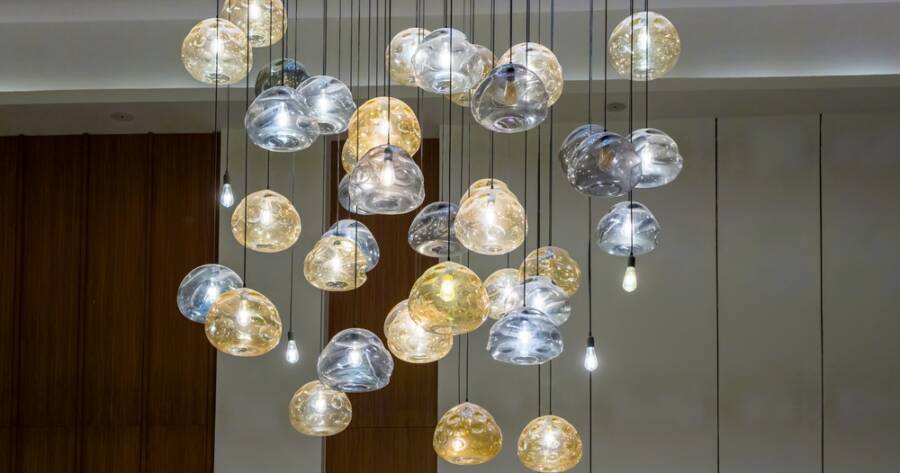
Traditional chandeliers have long dominated dining rooms, entryways, and other prominent spaces in American homes. However, a different lighting approach is gaining attention in 2026: clustered pendant lights. By combining multiple hanging fixtures into one coordinated arrangement, homeowners can create dramatic focal points without relying on a conventional chandelier.
Why Pendant Clusters Are Challenging Traditional Chandeliers
Chandeliers remain popular, but pendant clusters are becoming an appealing alternative for homeowners seeking a more contemporary appearance. Rather than suspending one large decorative fixture from the ceiling, this approach combines several smaller pendant lights into a unified arrangement.
Lighting trends for 2026 specifically highlight pendant clusters as an alternative to oversized chandeliers. Designers are experimenting with different heights, asymmetric configurations, and grouped glass globes to introduce visual interest into kitchens, dining rooms, and entryways (source).
The appeal lies in flexibility. Homeowners can select matching pendants for a coordinated appearance or combine complementary designs to create something more individual. Unlike traditional chandeliers with fixed arrangements, certain pendant systems allow greater control over the position and height of individual lights.
Sculptural Pendant Lights Create Artistic Focal Points
One reason pendant clusters are gaining attention is their ability to function as decorative features even when switched off. Instead of following the symmetrical arrangements associated with classic chandeliers, modern designs often incorporate irregular forms, curved silhouettes, and unexpected proportions.
Sculptural lighting is among the notable interior design trends of 2026. Organic shapes, suspended globes, and branching arrangements are appearing in contemporary interiors, helping lighting fixtures become prominent design elements rather than purely functional accessories (source).
A cluster of frosted glass spheres, for instance, can resemble a floating sculpture above a dining table. Alternatively, several narrow pendants suspended at different heights can create a striking vertical arrangement in an entryway. These approaches offer visual impact without requiring an elaborate crystal chandelier.
How Pendant Clusters Work in Different Rooms
Pendant clusters can be adapted to various rooms, although the arrangement should reflect the available space and lighting requirements.
In kitchens, three pendants positioned above an island can create a balanced appearance while providing illumination for food preparation and casual dining. Homeowners may choose identical fixtures for a streamlined look or vary their heights to introduce movement.
Dining rooms offer additional possibilities. A collection of smaller glass pendants can replace one large central chandelier, creating a decorative feature that complements the table’s dimensions. In stairwells and entryways with high ceilings, suspended lights at different levels can emphasize vertical space and architectural details (source).
However, clustered arrangements require thoughtful planning. Excessively large fixtures can overwhelm smaller rooms, while poorly positioned pendants may obstruct sightlines. The best results balance visual interest with adequate illumination and comfortable movement throughout the space.
Materials and Finishes Defining the 2026 Trend
The growing popularity of pendant clusters also reflects changing preferences in lighting materials. Natural textures and understated finishes are becoming important elements of contemporary interiors.
Wood, rattan, stone, and textured ceramics feature prominently in 2026 lighting trends. These materials can introduce warmth into kitchens and living areas dominated by polished surfaces or minimalist furniture. Warm metallic finishes, including aged brass and champagne bronze, provide another option for homeowners seeking a refined appearance (source).
Glass remains particularly versatile. Frosted glass can soften the appearance of exposed light sources, while ribbed or fluted shades introduce subtle patterns and decorative texture. Combining several pendants with related materials can create a cohesive installation without making every fixture identical.
Choosing the Right Size, Height, and Arrangement
Replacing a chandelier with pendant clusters requires more than selecting attractive fixtures. Homeowners should consider ceiling height, room dimensions, electrical connections, and how the lighting will be used.
Above a dining table, pendant shades should generally hang high enough to preserve comfortable sightlines across the seating area. Kitchen installations require sufficient clearance so the fixtures do not interfere with cooking, cleaning, or conversation.
The mounting arrangement also matters. Some pendant clusters connect to a single ceiling canopy, while others use separate electrical connection points. A qualified electrician can determine whether existing wiring supports the intended installation and whether additional modifications are necessary.
For practical lighting, homeowners should examine bulb brightness, shade opacity, and dimming compatibility. Multiple pendants do not automatically produce better illumination than a chandelier. Their effectiveness depends on appropriate spacing and the amount of light reaching the areas where it is needed.
Can Pendant Clusters Offer Better Value?
Pendant clusters can provide a distinctive appearance without requiring a custom-designed chandelier. Choosing several ready-made fixtures may offer more flexibility than purchasing one elaborate statement piece.
However, costs vary considerably. An arrangement requiring additional electrical connections, specialized mounting hardware, or professional modifications may cost more to install than replacing an existing chandelier with another single fixture.
Homeowners should therefore compare the combined price of the pendants, mounting equipment, bulbs, and installation. Selecting an arrangement compatible with existing electrical connections may help simplify the project.
Why Pendant Clusters Are Worth Considering in 2026
Clustered pendant lights offer a fresh alternative to traditional chandeliers by combining decorative impact with flexible arrangements. Their appeal comes from the ability to personalize a room through different shapes, materials, heights, and lighting effects.
Although conventional chandeliers remain relevant, pendant clusters reflect the growing interest in expressive, adaptable interior lighting. For homeowners updating a dining room, kitchen, or entryway in 2026, these fixtures provide an opportunity to create an individual statement without sacrificing practical illumination. The result can be a space that feels contemporary, inviting, and thoughtfully designed.