

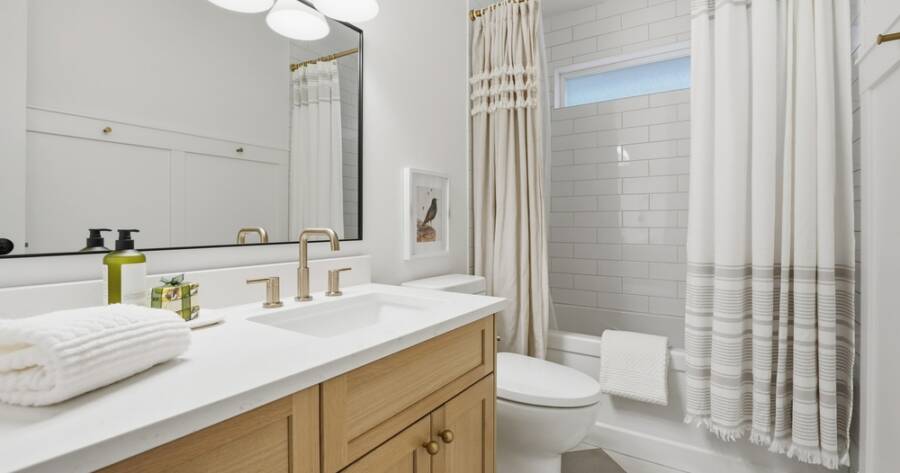
A small bathroom can feel completely different with one simple design change. Because a shower curtain takes up so much visual space, the right choice can influence how bright, open, and polished the room feels. Color, pattern, material, and even transparency can all change the effect without requiring a costly renovation.
Why Shower Curtains Have More Power Than Most People Realize
In a small bathroom, every design choice carries extra weight. The shower curtain is often the largest single textile in the room, which means it has an outsized influence on how the space looks and feels. It can soften the sharp edges of tile work, introduce pattern where none existed before, or pull together colors that already appear in other parts of the room (source). That kind of visual impact is rarely matched by any other single item in a bathroom.
What makes a curtain particularly valuable in a compact space is its flexibility. Unlike paint, tile, or fixtures, a shower curtain can be swapped out quickly and affordably. It is an opportunity to inject personality and color without committing to a full remodel (source). For renters and homeowners alike, this makes it one of the most accessible design tools available.
The Case for Light and Neutral Tones
Color choice plays a central role in how spacious a small bathroom feels. Light-colored curtains, especially white, reflect available light back into the room, creating a sense of openness that darker options simply cannot achieve. When paired with white tile or light-colored walls, a white curtain produces a clean and cohesive look that feels both airy and polished (source).
Neutral tones more broadly, including soft grays, warm creams, and sandy beiges, keep the eye from stopping abruptly at the curtain. Instead, the gaze flows through the space, which makes the room feel less visually cluttered. This approach works particularly well in bathrooms that already have strong tile patterns or bold fixtures, where a quieter curtain provides necessary balance.
Translucent and Clear Options That Open Up the Room
For bathrooms where limited natural light is a real concern, a translucent or fully clear shower curtain can make a meaningful difference. By allowing light to pass through from one area to another, these curtains eliminate the visual barrier that an opaque curtain creates. A translucent curtain keeps a compact shower from feeling like a dark enclosed cave and allows the full depth of the room to remain visible (source).
Clear curtains carry another practical benefit as well. They tend to be budget-friendly and simple to replace once they begin to show their age or wear (source). For anyone looking to maximize both visual space and value, they represent a straightforward solution that requires very little commitment.
Using Pattern and Stripe to Reshape Proportions
Stripes are among the most reliable tools in small-space design, and the direction of the stripe determines what kind of illusion it creates. Vertical stripes draw the eye upward, making low ceilings appear taller and the overall room feel more expansive in height. Horizontal stripes, on the other hand, push the eye sideways, which can make a narrow bathroom feel wider than it actually is (source). Choosing the right orientation depends on the specific proportions of the room.
Larger-scale patterns can also work in a small space, but they require some restraint elsewhere in the room. If the curtain features a bold print or high-contrast design, the remaining elements in the bathroom benefit from being more subdued. This balance keeps a small space from feeling visually overwhelming.
Fabric, Texture, and Construction Matter Too
Beyond color and pattern, the physical qualities of a shower curtain affect how it performs and how it looks day to day. The way a curtain hangs, how its fabric drapes, and how well it holds up against daily moisture all influence whether it continues to look good over time (source). A curtain that sags, resists proper hanging, or quickly develops mildew will undermine any design benefit it initially provided.
Texture is another dimension worth considering. A curtain that features woven detail or dimensional surface patterns can add visual interest through depth alone, without relying on bold color or graphic prints. This approach works especially well in bathrooms that already have textured tile or natural stone, where an additional layer of pattern might compete rather than complement (source).
Mildew resistance is a practical quality that should not be overlooked. Small bathrooms often have less ventilation than larger ones, which means moisture lingers longer. Selecting a curtain made from materials that actively resist mold and mildew growth extends the life of the curtain and keeps the bathroom looking cleaner between deeper cleanings.
Coordinating the Curtain With the Rest of the Bathroom
A shower curtain does not exist in isolation. It interacts with every other surface and object in the bathroom, including towels, rugs, wall color, and hardware. In a small space, this relationship is amplified because there is less visual distance between elements. Choosing a curtain that echoes a color found elsewhere in the room, whether in an accent tile, a plant, or a set of towels, creates a sense of intention that elevates the overall design without requiring any structural changes.
Color blocking is one technique that achieves this kind of coordinated effect. By pairing a curtain with two or more distinct colors that relate to other elements in the room, the bathroom gains a curated quality that feels deliberate rather than accidental. This approach transforms a functional purchase into a genuine design statement.
Why You Should Learn More About Shower Curtain Ideas for Small Bathrooms
Small bathrooms present real design challenges, but the shower curtain is one of the most effective and accessible tools for addressing them. Whether the goal is to maximize light, create the illusion of height or width, introduce personality, or simply refresh a tired space, the right curtain choice can accomplish all of this without renovation.
Understanding the relationship between color, pattern, texture, and proportion helps anyone make a more informed decision, one that serves both function and style for years to come. Exploring these ideas further can reveal just how much a single textile can transform a room that might otherwise feel limiting.