

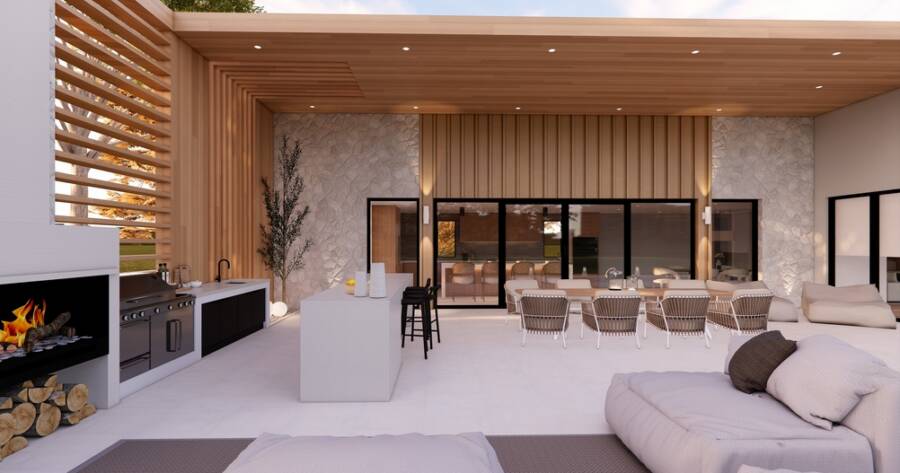
The familiar patio set is starting to look a little predictable. In 2026, outdoor spaces are becoming more personal, polished, and closely connected to the way people actually live at home. Instead of simply filling a deck or backyard with matching furniture, homeowners are embracing a more considered approach that brings fresh character and flexibility outside.
The End of the Matching Patio Set
For decades, the default approach to outfitting a backyard involved purchasing a coordinated patio set: matching chairs, a central table, and perhaps a standardized umbrella. That approach is losing ground quickly. Designers and retail experts are now pushing homeowners toward curated, mix-and-match arrangements that prioritize individual character over uniformity. According to outdoor design professionals, European summer aesthetics, featuring wrought iron details, tailored stripes, awning-inspired silhouettes, and airy umbrellas, are being used to create a sense of timeless outdoor ease without relying on matching furniture sets (source).
This shift reflects a broader cultural change. Homeowners are putting more thought into how outdoor areas function from day to day, with greater emphasis on comfort, practicality, and spaces that feel like a natural extension of the home rather than somewhere used only for special occasions (source). In other words, the backyard is no longer an afterthought; it is an extension of the home itself.
Architectural Materials Are Taking Over
One of the most defining characteristics of 2026 outdoor furniture trends is the turn toward what designers are calling “architectural” pieces. Rather than lightweight resin or mass-produced aluminum, homeowners are investing in furniture built from stone, wood, and woven fibers in earthy tones that blend into the surrounding landscape rather than contrasting with it (source). These materials bring a sculptural weight to exterior spaces that plastic or powder-coated metal simply cannot replicate.
This preference also connects to a wider movement toward warmer, more natural color palettes. Cooler grays, which were once dominant in both indoor and outdoor design, are being replaced by tones drawn from natural stone, clay, and weathered materials (source). The result is a visual warmth that feels grounded, organic, and genuinely livable rather than staged or seasonal.
Multi-Purpose Zones Are Replacing Single-Function Layouts
Another major departure from traditional patio design is the embrace of flexible, multi-purpose outdoor zones. Rather than designating one area for dining and another for seating (with little thought given to how those zones interact), homeowners are now planning spaces that shift fluidly between different uses. Backyard layouts are becoming more adaptable, with furniture and zones arranged so the same area can support relaxing, meals, family activities, or entertaining as needs change (source).
This kind of purposeful versatility means furniture choices matter more than ever. Pieces must work across multiple contexts — a deep lounge chair that also suits an outdoor dining conversation, or a side table that doubles as a surface during a gathering. The rigidity of the classic patio set simply cannot meet these demands, which is part of why it is fading from favor.
Layered Lighting as a Design Statement
Perhaps no single element better captures the transformation of the modern American backyard than the emergence of layered outdoor lighting. Where a single overhead fixture or a string of bistro lights once sufficed, today’s outdoor design calls for a more sophisticated approach. Layered lighting, including table lamps, sconces, and pendants, is described as one of the most underrated and transformative aspects of outdoor design, adding vertical texture to exterior spaces (source).
This is a meaningful departure from the purely functional lighting that once defined patio spaces. Outdoor lighting in 2026 is expected to perform in the same way as interior lighting, creating mood, defining zones, and contributing to the overall design narrative of the space. Technology-ready outdoor spaces featuring integrated lighting, smart controls, and built-in elements are shaping how homeowners use their backyards as part of daily life (source).
Sophistication Has Moved Outside
Taken together, these trends point toward a single overarching truth: Outdoor furniture is increasingly expected to combine durability with stronger design appeal, giving homeowners more options for creating exterior spaces that feel polished, comfortable, and intentionally styled (source). The American homeowner is no longer settling for furniture that simply survives the seasons. They are looking for pieces that genuinely elevate how they spend time outside.
Stone-based accents, woven textures, warm earth tones, adaptable layouts, and layered lighting are not passing fads. They represent a fundamental rethinking of what a backyard can and should be. What was once acceptable as a purely functional outdoor setup is now held to the same standard as any well-designed interior room — and the furniture industry is responding accordingly.
Why You Should Learn More About Patio Furniture Trends in 2026
Understanding what is replacing traditional patio furniture matters for anyone planning an outdoor refresh. The movement away from matched sets and toward architectural materials, warm palettes, flexible zones, and layered lighting reflects how deeply the definition of outdoor living has changed. Homeowners who stay informed about these shifts are better positioned to make purchases that hold both aesthetic and practical value over time.
Whether renovating a modest deck or designing an expansive backyard retreat, knowing the direction outdoor design is heading helps ensure that today’s investment still feels relevant years from now. The backyard, once treated as secondary space, has earned a central role in how Americans live — and the furniture filling it deserves the same thoughtful attention given to any room indoors.