

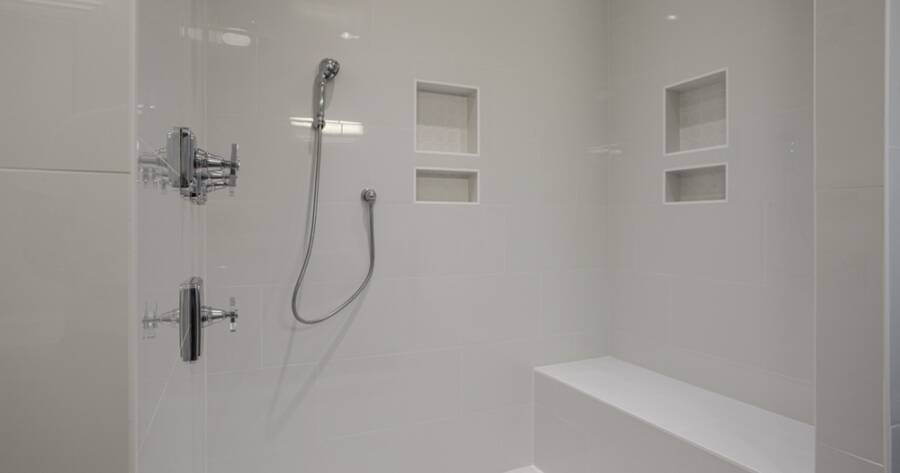
Shower seating no longer has to look purely functional or temporary. Built-in benches, fold-down seats, teak designs, and sturdier portable chairs can provide different combinations of comfort, support, space efficiency, and style. With more choices available than the traditional plastic stool, homeowners can select seating that better suits their bathroom layout, mobility needs, and design preferences.
Why Shower Seating Matters More Than Most People Realize
Many homeowners still view shower seating as a purely medical accessory, something reserved for recovery or old age. However, occupational therapists and accessibility experts increasingly frame it as a fundamental safety feature for bathrooms of all kinds. Removing the balance challenge that comes with standing in a wet, slippery shower is considered a key strategy for preventing falls (source).
The stakes are higher than many people consider. According to one associate professor at the University of Illinois, “lack of independence in the shower is the number one reason that an individual will be accelerated to a long-term living care facility” (source). That single observation reframes shower seating from optional accessory to essential infrastructure in any thoughtfully designed home.
There is also a physical endurance dimension that often goes unacknowledged. Standing in hot water for an extended period demands roughly the same energy output as “heavy chore work, like stripping or making a bed, swimming, or dancing,” according to occupational therapist Keri DeGroot (source). For older adults, people managing chronic illness, or anyone recovering from surgery, that energy cost is not trivial.
The Problem With Traditional Plastic Stools
For decades, the standard answer to shower seating was a basic plastic stool or chair, typically white or gray, lightweight, and utilitarian in appearance. While these products addressed the core need, they came with notable limitations. Plastic can degrade with prolonged moisture exposure, often looks out of place in a well-designed bathroom, and rarely offers the aesthetic warmth that modern homeowners now expect from their spaces.
Beyond appearance, stability has always been a concern with freestanding plastic options. They can shift underfoot, lack the secure anchoring that wall-mounted or built-in seats provide, and generally feel like temporary solutions rather than permanent fixtures. The growing demand for bathroom spaces that are both accessible and visually appealing has pushed designers, manufacturers, and homeowners toward a new generation of seating alternatives.
Built-In Shower Benches: Permanent, Stable, and Stylish
Built-in shower benches represent one of the most significant upgrades available to homeowners who want both form and function. Built-in shower benches are fixed directly into the shower structure, giving users a more stable seating option than a movable stool or chair. Depending on the design and installation, some models are rated to hold 400 pounds or more (source). Because they are integrated into the shower structure itself, they also contribute to the overall design aesthetic rather than disrupting it.
Materials play a major role in the appeal of built-in options. Tile-covered benches blend seamlessly with surrounding walls and floors, while teak wood benches bring a spa-like warmth that plastic simply cannot replicate. When properly treated, teak resists warping and moisture damage over many years, making it a durable long-term investment (source). Tile-surfaced benches similarly handle heavy use and constant moisture exposure without deteriorating.
Installation costs for built-in benches reflect the complexity of the work involved, typically ranging from several hundred to several thousand dollars depending on materials and structural requirements (source). For homeowners planning a full bathroom renovation, incorporating a built-in bench at the outset is often the most cost-effective approach.
Fold-Down Shower Seats: Space-Smart and Affordable
Not every bathroom has the square footage to accommodate a full built-in bench, and not every homeowner wants a permanent structural change. Fold-down shower seats address both concerns by offering wall-mounted seating that folds flat when not in use. This design keeps the shower floor open during standing use while providing secure, anchored support whenever the seat is needed.
Modern fold-down seats have moved well beyond the institutional-looking hardware of earlier decades. Many now feature bamboo or teak surfaces, powder-coated metal frames, and clean lines that complement contemporary bathroom design. Many fold-down shower seats can be mounted without a lengthy installation process, making them a practical option for homeowners who want permanent support without undertaking a major bathroom renovation (source).
Modern Portable Chairs: When Flexibility Comes First
For renters, frequent travelers, or households where multiple people share a bathroom with different needs, a high-quality portable shower chair remains a relevant and practical option. Today’s best portable chairs have little in common with old-fashioned plastic designs. Some models combine lightweight construction with impressive load capacity, adjustable height settings, and corrosion-resistant materials that hold up far better over time.
One example from recent product testing highlights how far portable seating has advanced. The KingPavonini Shower Chair weighs just 7.6 pounds yet supports up to 550 pounds, with height adjustability between 15.5 and 19.5 inches to accommodate a wide range of users (source). That combination of portability and robust engineering reflects a broader trend in accessible design: prioritizing real-world usability without sacrificing strength or adaptability.
Matching the Right Seat to the Right Situation
Choosing among built-in, fold-down, and portable options depends on several intersecting factors: the size and layout of the shower space, the specific mobility or endurance needs of the user, the aesthetic priorities of the homeowner, and the budget available for installation and materials. Each category carries genuine advantages, and understanding those trade-offs is essential before making any purchasing or renovation decision.
Older adults aging in place often benefit most from the permanence and load capacity of a built-in bench or a securely anchored fold-down seat. Households with younger users who want the option without the commitment may find fold-down models strike the ideal balance. Caregivers managing accessibility across multiple settings, or individuals whose needs may change over time, often value the flexibility that a well-built portable chair provides.
What connects all of these modern options is a departure from the purely functional and visually forgettable plastic stool. Whether the priority is design cohesion, maximum stability, minimal footprint, or all three, there is now a shower seating solution that can meet that need without making the bathroom look clinical.
Why You Should Learn More About Modern Shower Seating Solutions Today
Shower seating has matured into a category that serves safety, comfort, and style in equal measure. Built-in benches, fold-down wall seats, and advanced portable chairs each bring distinct advantages that far outpace what traditional plastic stools ever offered. With occupational therapists emphasizing the role of seating in fall prevention and long-term independence, understanding these options carries real weight for homeowners at every life stage.
Whether someone is planning a full bathroom renovation or simply looking for an immediate improvement, the modern shower seat market offers thoughtful solutions across every budget and design preference. Taking time to explore the full range of materials, configurations, and installation requirements helps any homeowner make a decision that will serve them well for years to come.