

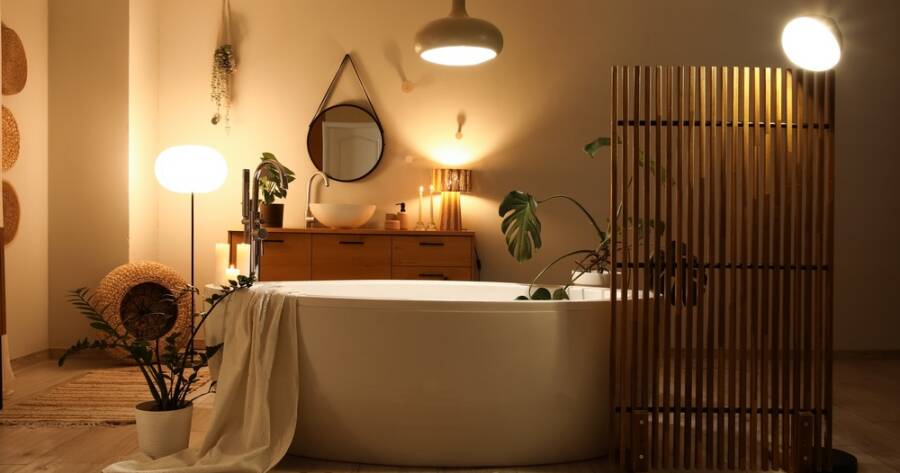
Bathroom rugs are no longer limited to basic mats chosen purely for function. Modern designs can add warmth, color, texture, and personality while still handling the practical demands of a moisture-prone space. As older matching sets fall out of favor, homeowners have more stylish options that balance easy care with a polished look and feel more intentional within the overall bathroom design.
Why Old Toilet-Contour Sets Look Dated
Matching shaggy mats shaped around the toilet were once common bathroom accessories, but the look can now make a space feel dated. Contemporary bathrooms tend to favor cleaner arrangements with fewer floor coverings and rugs that look deliberately chosen rather than purchased as part of a matching set. Low-profile designs, washable materials, and sophisticated patterns offer a more streamlined alternative (source).
Practicality also matters. Deep-pile rugs positioned around toilets or directly beside wet areas can hold moisture and require more upkeep. Removing unnecessary mats can make the floor easier to clean while allowing one carefully placed rug or bath mat to have a greater visual impact.
Statement Rugs Are Replacing Basic Bath Mats
A bathroom rug can now function much like a rug in any other room. Rather than simply providing somewhere soft to step after a shower, decorative rugs are being used to ground the space, introduce warmth, and break up expanses of tile or stone. Statement designs with richer colors and distinctive patterns can turn a practical accessory into part of the room’s overall character (source).
Placement is important. A larger decorative rug can work well in a spacious bathroom away from direct splashing, while a compact bath mat may still be more practical immediately outside a shower or tub. The goal is not necessarily more floor coverage, but choosing the right piece for each part of the room.
Vintage-Inspired Patterns Bring More Personality
Vintage and traditional patterns offer an alternative to plain white or gray bath mats. Persian-inspired motifs, faded florals, geometric designs, and darker colors can soften a bathroom filled with hard surfaces while introducing a more collected, lived-in appearance.
Designers increasingly use vintage-style rugs to create contrast in both traditional and modern bathrooms. Homes & Gardens notes that a thoughtfully chosen rug can add texture, warmth, and personality to a space that might otherwise feel cold or clinical (source). However, decorative rugs still need to be selected with moisture in mind, particularly if they will sit close to a shower or bathtub.
Washable Rugs Combine Style With Easier Care
Washability is one of the most useful features to look for in a bathroom rug. Bathrooms naturally expose textiles to damp feet, splashes, hair products, and everyday dirt, making regular cleaning important. Machine-washable designs can be refreshed more easily than rugs requiring specialized cleaning and may be particularly practical in busy households.
Washable construction no longer means settling for a plain or utilitarian appearance. Modern options include patterned rugs, runners, and vintage-inspired designs that resemble traditional floor coverings while being easier to maintain. Homes & Gardens specifically recommends washable rugs or water-resistant materials for bathrooms because they are easier to clean when exposed to moisture (source).
Non-Slip and Fast-Drying Features Matter
Style is only part of the decision. Bathroom floors can become slippery, so a rug needs to remain secure rather than sliding when stepped on. Non-slip backing or a suitable rug pad can help keep a floor covering in place, particularly on smooth tile. LA Home Decor also identifies non-slip backing as an important feature when choosing a modern bathroom rug (source).
Drying time deserves attention as well. A rug that remains wet for extended periods can become unpleasant and difficult to maintain. Lower-profile, washable, or moisture-resistant materials may be better choices for areas exposed to frequent splashes, while decorative rugs made from more sensitive fibers are generally better positioned farther from direct water.
Choose the Rug for the Space, Not Just the Trend
No single bathroom rug works everywhere. A small bathroom may benefit from one compact mat placed where it is most useful, while a larger room can accommodate a runner or statement rug that helps define an open area. Material, ventilation, traffic, and proximity to water should all influence the choice.
Natural-fiber or vintage rugs can add beautiful texture, but they require more careful placement in a humid environment. Homes & Gardens advises choosing washable or water-resistant options when possible and keeping more delicate natural-fiber rugs away from direct contact with water (source). Practical needs should ultimately guide the material even when style is the starting point.
A Small Change That Can Transform the Room
Replacing an old toilet-contour set or worn bath mat is a relatively simple way to refresh a bathroom without changing its permanent fixtures. Decorative patterns, washable construction, secure backing, and thoughtful placement allow a rug to contribute to the room rather than feeling like an afterthought.
Modern bathroom rugs work best when style and practicality support each other. A beautiful rug still needs to cope with the conditions of the room, while a functional mat does not have to look purely utilitarian. Choosing a design suited to both the space and daily routine can create an update that feels current without depending on a short-lived trend.