

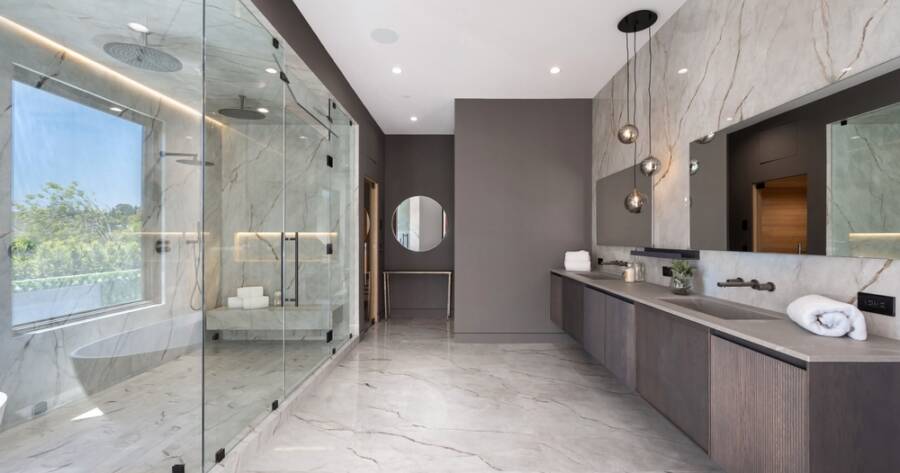
Bathroom flooring is no longer treated as a purely practical backdrop. Designers are giving the surface underfoot far more attention, using it to introduce warmth, texture, personality, and a stronger sense of style. As familiar bathroom looks begin to shift, new materials and finishes are changing what homeowners expect from one of the hardest-working surfaces in the room.
Why the Toilet Rug Era Is Finally Over
For decades, small fabric rugs draped around the base of toilets and bath mats arranged in matching sets were considered standard bathroom decor. As bathroom floors become more decorative, there is less reason to treat them as surfaces that need to be hidden beneath matching rug sets. Current design trends are giving flooring a more visible role, with texture, pattern, and natural-looking materials becoming part of the room’s overall character (source).
The shift reflects a broader cultural change in how bathrooms are viewed. Rather than purely functional rooms, bathrooms are evolving into personal wellness retreats. Beautifully designed floors have become the visual centerpiece of these spaces, replacing the old instinct to layer rugs over surfaces that were chosen more for practicality than aesthetics (source).
The Materials Making Waves
One of the most significant shifts in bathroom flooring is the rejection of cold, featureless tile. Flat porcelain in oversized formats with cool gray or bright white tones once dominated renovation projects, but designers are now steering clients away from surfaces that read as sterile and lifeless. In their place, organic textures and natural stone are rapidly gaining ground (source).
Materials like travertine, limestone, zellige tile, and quartzite are being selected for their warmth, individuality, and tactile richness. These surfaces carry natural variation and depth that manufactured flat tile simply cannot replicate. Each stone tile tells a slightly different visual story, which is exactly the kind of character homeowners are now seeking (source).
Marble-look tile also continues to hold its place as a perennial favorite. Unlike many trendy aesthetics that cycle in and out, the appeal of marble-inspired surfaces has remained steady across design generations, making it a reliable choice for homeowners who want a floor that will still feel fresh years from now (source).
Waterproof Technology Has Expanded the Possibilities
Perhaps nothing has transformed bathroom flooring more profoundly than advances in waterproof flooring technology. Innovations in materials manufacturing have made it possible to install virtually any flooring type in moisture-heavy environments without fear of warping, swelling, or damage (source).
Wood-look flooring is a strong example of this revolution. Authentic hardwood and bathrooms have historically been a poor combination, but waterproof laminate and vinyl options now deliver highly convincing wood aesthetics with none of the vulnerability to moisture. This crossover trend has made it possible to carry cohesive flooring styles from living areas straight into bathrooms, creating a more unified home interior (source).
WPC and SPC vinyl floors represent the fastest-growing category in the bathroom flooring market. Their durability, waterproof construction, and increasingly realistic mimicry of natural materials have made them a top choice for both renovation professionals and DIY homeowners. As manufacturing techniques improve, the visual gap between vinyl and genuine stone or wood continues to narrow (source).
The Spa Aesthetic Is Driving Floor Choices
The all-white minimalist bathroom, once the gold standard of modern design, is losing favor heading into 2026. While clean lines and pale palettes carry a certain visual order, designers note they can feel clinical and devoid of personal character. Homeowners are gravitating toward spaces that feel restorative rather than institutional (source).
Bathrooms are being reimagined as home spa environments that serve both physical and mental wellbeing. Floors play a central role in this transformation. Warmer tones, textured surfaces, and natural material choices all contribute to the sensory atmosphere of a space designed for genuine relaxation. Soft lighting and calming color palettes pair naturally with stone-look or wood-look floors to create environments that feel worlds away from the stark tile bathrooms of previous decades (source).
The result is a bathroom floor that does more than cover the ground beneath a homeowner’s feet. It sets the tone for the entire room, anchoring the design and eliminating any need for decorative rugs to compensate for a surface that lacks visual interest.
Why You Should Learn More About Modern Bathroom Floor Trends
Bathroom flooring has moved far beyond basic tile selection. Today’s options span waterproof vinyl that convincingly mimics natural stone, warm travertine surfaces that evoke a spa retreat, and marble-look tile with timeless resale appeal. Modern floors have finally become worth showing off.
Homeowners who invest time in understanding current flooring materials and technologies will be better positioned to make decisions that add lasting value, improve daily comfort, and reflect genuine personal style. Whether planning a full renovation or a modest refresh, the floor is the single surface with the greatest power to define a bathroom’s entire character.