

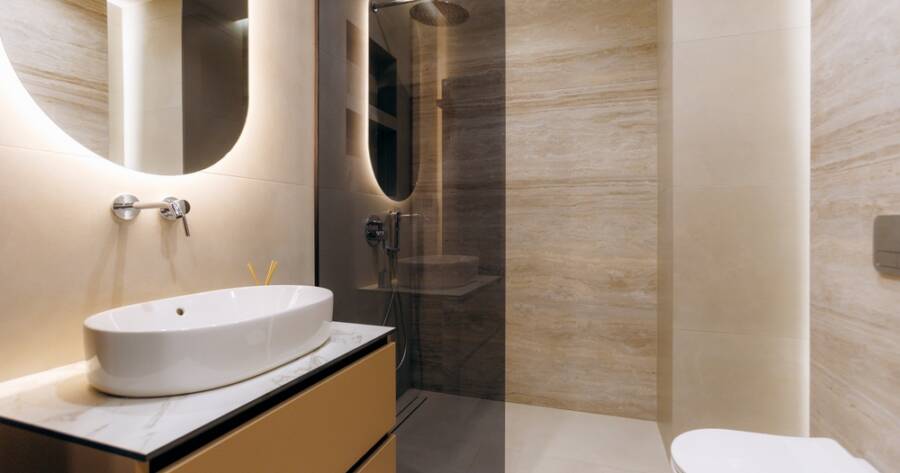
Glass shower doors have been a bathroom standard for years, but they aren’t always the best fit for every space, budget, or renovation plan. As bathrooms become more focused on comfort, accessibility, and personal style, homeowners are reconsidering how the shower needs to be enclosed at all. Newer layouts and familiar solutions alike are opening the door to more flexible bathroom design.
Why Homeowners Are Rethinking Shower Enclosures
The modern bathroom is no longer just a functional space. It has become a personal retreat. According to industry research, nine out of ten designers report that homeowners want their primary bathrooms to serve as escapes from daily stress, places built for relaxation and restoration (source). This shift in mindset is driving a fundamental rethinking of how showers are designed and enclosed.
One of the most significant trends supporting this change is the growing desire for larger shower spaces. More than half of homeowners are actively choosing to remove their bathtubs in order to expand their showers, creating an immediate demand for enclosure styles that feel open and unrestrictive (source). As shower footprints grow, the traditional hinged glass door, often bulky and limited in its design flexibility, starts to feel out of place.
Inspiration is also coming from beyond the home. Research shows that nearly four out of five design professionals agree that the look and feel of hotels and high-end resorts is directly influencing what homeowners want in their primary bathrooms (source). That resort aesthetic — open, airy, uncluttered — is difficult to achieve with a conventional framed door setup.
The Rise of Low-Maintenance Shower Solutions
Ease of cleaning has become a top priority among homeowners and designers alike. More than half of design professionals identify low maintenance as the single most important characteristic for a shower space (source). Traditional glass doors with metal frames are notorious for collecting soap scum, mineral deposits, and mold along their tracks and seals — an ongoing cleaning challenge that many renovators are eager to leave behind.
This frustration has helped fuel interest in frameless and minimalist alternatives. Fixed glass panels, for instance, deliver the clean, modern look of glass without the complexity of a moving door. They are easier to wipe down, create minimal visual obstruction, and take up less physical space in the bathroom (source). For homeowners who want the transparency of glass without the maintenance burden of full door hardware, fixed panels offer a compelling middle ground.
Shower Curtains: A Budget-Friendly Comeback
Not every alternative to a glass shower door needs to be an architectural statement. Shower curtains have seen a resurgence in popularity, partly because they are among the most accessible and affordable enclosure options available (source). Depending on the size and material quality chosen, curtains can be sourced at a very modest price point, making them especially attractive for renters and homeowners working within tighter renovation budgets (source).
Beyond cost, curtains offer unmatched flexibility in terms of style. They can be swapped out seasonally, changed to match new décor, or upgraded to more luxurious fabric options as budgets allow. While they may not carry the same high-end feel as glass, a well-chosen curtain can complement a thoughtfully designed bathroom without looking out of place.
Barn-Style Doors and Space-Saving Designs
For homeowners who want something with more visual character, sliding barn-style shower doors represent one of the more distinctive alternatives on the market. Rather than swinging open into the bathroom, these doors travel along an exposed overhead track, keeping the footprint of the shower contained and the surrounding floor space free (source). This makes them particularly well-suited to smaller bathrooms where every square foot matters.
The design versatility of barn-style doors is also a significant draw. Homeowners can choose from a range of materials — including wood, frosted glass, and metal — to match the overall aesthetic of their renovation. The result is a shower enclosure that functions as a design element in its own right, not merely a practical necessity.
Wet Rooms: The Ultimate Open Bathroom Experience
At the far end of the design spectrum sits the wet room — a concept borrowed directly from high-end hotel and spa design. A wet room eliminates shower barriers entirely by waterproofing every surface of the bathroom, allowing water to drain across a sloped floor toward a central drain (source). The resulting space is completely open, seamlessly integrated, and extraordinarily easy to clean.
The tradeoff is investment. Wet rooms require intensive renovation work and carry higher upfront costs than most other enclosure alternatives. However, for homeowners undertaking a full bathroom remodel with a generous budget, they represent perhaps the most complete realization of that coveted spa-at-home experience. Given that hotel and resort aesthetics are actively driving renovation decisions, the wet room concept is growing in appeal among those seeking a truly transformative bathroom upgrade.
Why You Should Learn More About Shower Door Alternatives Today
The landscape of shower enclosure design has evolved well beyond the standard glass door. From budget-conscious curtains and sleek fixed panels to statement-making barn doors and fully open wet rooms, homeowners across the United States now have a rich array of options to match their style preferences, spatial needs, and maintenance expectations.
The broader movement toward spa-inspired, easy-to-clean, and architecturally flexible bathroom spaces is not a passing trend; it reflects a genuine change in how people value and use their homes. For anyone planning a bathroom renovation, exploring these alternatives is a worthwhile part of the planning process.