

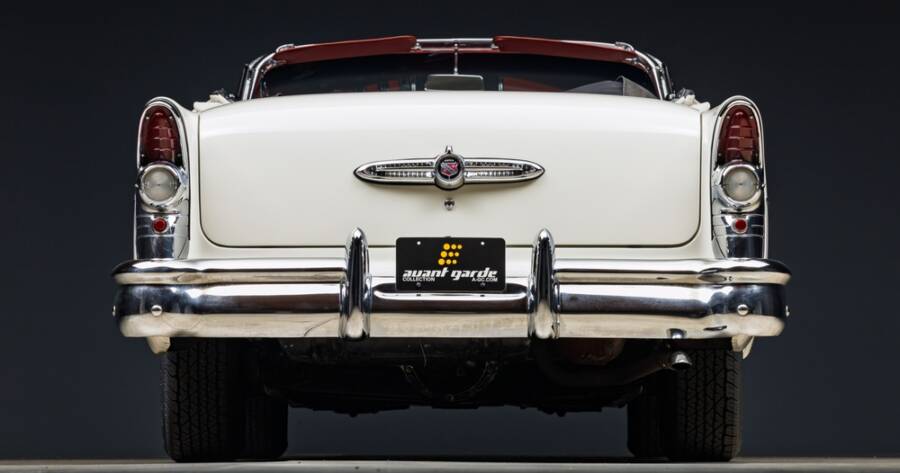
The 1950s gave birth to some of the most breathtaking open-top automobiles ever built, but many have faded from public memory. Forgotten convertibles represent a golden era of American automotive ambition, with bold styling and mechanical innovation that still captivates collectors and enthusiasts.
The Golden Age of American Convertibles
Postwar prosperity reshaped American culture in ways that extended far beyond television, drive-in theaters, and rock and roll. That optimism poured directly into automobile design, producing vehicles that prioritized dramatic styling and sheer presence over technical restraint (source). Convertibles, in particular, became rolling symbols of freedom and abundance — wide, chrome-laden machines that announced their presence before they even rounded the corner.
Open-air motoring has deep roots stretching back to the earliest horseless carriages, but the 1950s elevated the convertible to something altogether more theatrical (source). Manufacturers competed fiercely to outdo each other with longer hoods, taller fins, and more extravagant interiors. Many of the models produced during this decade never achieved lasting fame — yet they deserve just as much attention as the celebrated icons that dominate automotive history books.
Cadillac’s Towering Ambition
When most people picture 1950s excess, the 1959 Cadillac Eldorado comes to mind — and for good reason. Its tail fins climbed to extraordinary heights, each one capped by twin rocket-shaped taillights that looked more at home in a science fiction film than on a public road (source). The Eldorado line offered buyers a staggering range of configurations, with the 1959 model alone available in 11 variants, including the Biarritz and Seville, and featuring over 100 possible interior combinations (source).
Beyond its visual drama, the 1959 Eldorado represented a genuine leap in passenger comfort. Power seats, windows, door locks, steering, and brakes were all standard equipment — features that many modern drivers take entirely for granted (source). An air suspension system came fitted as well, providing a ride quality that outclassed nearly every competitor on the market. The jeweled grilles and extensive chrome trim completed an aesthetic that one description called “the epitome of over-the-top 1950s styling” (source).
What makes the Eldorado especially significant in the context of forgotten convertibles is that its siblings — the lesser-known Biarritz variants from earlier in the decade — rarely receive comparable attention. These earlier Eldorados laid the foundation for the 1959 model’s excess, yet they exist today in far smaller numbers and surface at auction far less frequently.
The Corvette’s Open-Top Origins
Among the American convertibles that defined the 1950s, the Chevrolet Corvette holds a unique place. Every Corvette produced between 1953 and 1962 came exclusively as a convertible, making it fundamentally an open-top car from its very inception (source). The early years of Corvette production are often overshadowed by later, more powerful generations, yet the mid-decade transformation gave the car a genuine identity.
The 1956 model year proved pivotal. That edition marked the first time the Corvette visibly and audibly transformed into a serious performance machine, with a standard V-8 engine installed beneath a reshaped body that finally matched the car’s sporting ambitions (source). The earliest Corvettes from 1953 and 1954, however, remain among the rarest and most overlooked examples of 1950s convertible production — built in tiny numbers and largely forgotten outside dedicated collector circles.
Chrysler and the Performance Convertibles Few Remember
Cadillac and Corvette tend to dominate conversations about 1950s American convertibles, but Chrysler produced machines during this era that deserve equal recognition. The 1957 Chrysler 300C, for instance, mounted a 392-cubic-inch hemi-head V-8 equipped with dual carburetors, producing 375 horsepower in standard form (source). That output helped establish the appetite for high-performance American cars that would define the following decade.
Chrysler’s convertible offerings from the late 1950s blended brute mechanical capability with the same sweeping design language that characterized the entire era. Long, low rooflines gave way to open sky at the push of a button, while the engines underneath promised performance that few roads of the period could fully accommodate. Yet despite their impressive specifications and historical importance, many of these Chrysler convertibles remain far less celebrated than their Chevrolet and Cadillac counterparts.
What Made 1950s Convertibles Truly Special
The design philosophy driving 1950s convertible production reflected a specific cultural moment that has never quite been repeated. Size and visual drama took precedence over engineering refinement, and the results were vehicles that communicated aspiration, optimism, and freedom in physical form (source). Every chrome strip, every sculpted fin, and every power-operated top told a story about what Americans believed the future would look like.
Collectors who seek out these forgotten models today often discover machines that have survived in surprisingly good condition, precisely because they were so rarely driven hard. The rarest examples — obscure trim levels, low-production color combinations, and factory-option variants — can represent some of the most historically significant artifacts from the entire postwar period. Their absence from mainstream automotive conversations makes them no less worthy of study and admiration.
Why You Should Learn More About 1950s Convertibles
The forgotten convertibles of the 1950s occupy a fascinating space in American automotive history — produced during a decade when manufacturers competed through boldness rather than restraint. From Cadillac’s rocket-tipped fins and triple-digit interior combinations to Chrysler’s thundering hemi engines and the Corvette’s all-convertible early years, these machines captured a cultural moment unlike any other.
Many rare examples remain undiscovered by the broader public, waiting for enthusiasts willing to look beyond the most familiar names. Studying these vehicles offers a richer, more complete picture of how American ingenuity and postwar ambition shaped the automobile into something far more than simple transportation — it became an expression of identity itself.