

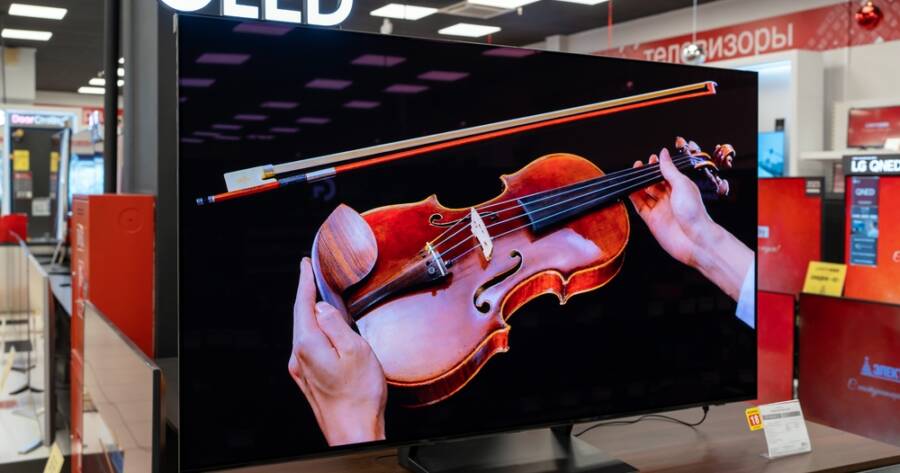
Flat-screen TVs transformed home entertainment, but display technology rarely stays still for long. New approaches are changing how screens produce color, contrast, brightness, and even how they fit into a room. As manufacturers push beyond familiar LED designs, the next generation of home viewing is beginning to look noticeably different from the televisions that dominated living rooms for years.
The Flat Screen’s Long Reign and Its Challengers
For decades, flat panel televisions evolved steadily from plasma to LCD to LED-backlit displays, each generation improving on the last. That progression has not stopped — it has accelerated. Several emerging technologies are now pushing picture quality, form factor, and functionality well beyond what conventional flat screens deliver. Understanding what is replacing the flat-screen TV means looking at the technologies competing for that living room wall.
Traditional LED TVs use a backlight system behind a liquid crystal panel, which limits how dark blacks can appear and how precisely brightness can be controlled across the screen. Newer approaches attack these limitations from fundamentally different angles, producing images that are sharper, more colorful, and more lifelike than anything a standard flat panel can achieve.
OLED: The Panel That Lights Itself
Organic Light Emitting Diode technology represents one of the most significant departures from conventional flat-screen design. Rather than relying on a backlight, OLED displays use individual diodes that produce their own light and color when electricity passes through them (source). Because each pixel can be switched off entirely, OLED panels produce blacks that are genuinely dark rather than approximated, yielding contrast ratios that far exceed what projectors or standard LED televisions can match (source).
OLED screens are also available in impressively large sizes, and their picture quality advantage over competing technologies in the mid-range price tier remains substantial. For many consumers, an OLED television represents the most practical upgrade over a conventional flat screen available today.
QD-OLED and QNED: Two Paths Beyond Standard LED TVs
TV makers are improving picture quality through several very different technologies. QD-OLED combines OLED’s self-emitting design with a quantum-dot layer that converts light into highly precise colors. Because the display does not depend on a conventional LCD backlight, it can retain the deep blacks associated with OLED while improving color reproduction and brightness. Samsung Display continues to develop the technology, including a new generation of QD-OLED panels introduced in 2026 with improvements aimed at efficiency, lifespan, and peak brightness (source).
QNED takes another route. LG’s current QNED evo televisions remain LCD-based but use Mini LED backlighting, advanced color technology, and more precise dimming to improve contrast and brightness. LG expanded the lineup again for 2026, including 100-inch and 115-inch models designed around increasingly large home-entertainment screens (source). Rather than one display technology replacing every other option, the market is splitting into several premium approaches that improve on older LED-backlit TVs in different ways.
MicroLED: A Modular Alternative at the Premium End
MicroLED takes a more radical approach by using microscopic LEDs that generate their own light instead of relying on a separate backlight. Samsung’s MicroLED-based The Wall demonstrates one of the technology’s biggest advantages: individual display modules can be joined together to create screens in different sizes and shapes. The design also allows for strong contrast, high brightness, and a seamless appearance across a very large viewing area (source).
For now, MicroLED remains far removed from the typical living-room television. Samsung currently positions The Wall heavily toward premium residential installations, corporate spaces, retail environments, and other large-scale applications rather than ordinary mass-market TV buyers. That means MicroLED is better viewed as a glimpse of where display design could go than as an immediate replacement for conventional televisions. Its self-emitting pixels and modular construction point toward a future in which screen size and shape are less restricted by the dimensions of a single manufactured panel (source).
Projectors: A Screen-Free Alternative Gaining Ground
Not every challenger to the flat screen involves a panel at all. Modern projectors, particularly laser-based models, have closed the gap with flat panel televisions in meaningful ways. An affordable projector can generate an image well over 100 inches across — a size that no flat-screen TV reaches at a comparable price point, offering a compelling advantage in pure screen real estate (source).
Large flat-screen TVs have also dropped considerably in price, with 75-inch and bigger models now selling at prices that once only bought a 50-inch set, while projector performance has improved substantially over the same period (source). One practical advantage of projector setups is that the display disappears when not in use — no large black rectangle occupying wall space when the system is off (source). However, projectors still cannot match the contrast or black level performance of a quality OLED panel, which remains a meaningful limitation for picture quality enthusiasts.
HDR Standards and the Role of Display Intelligence
Beyond the physical panel technology, the way displays process high dynamic range content is also evolving. Dolby Vision, for example, uses dynamic metadata that adjusts HDR settings on a scene-by-scene basis as content plays, automatically optimizing the picture for each moment rather than applying static settings to an entire film or episode (source). This kind of adaptive processing works in tandem with advanced panel technologies, meaning the hardware and software layers of modern televisions are improving simultaneously.
For consumers evaluating what is replacing the flat-screen TV, this combination of smarter processing and superior panel engineering means the gap between current mainstream televisions and yesterday’s flat screens widens every year.
Why You Should Learn More About TV Display Technology Today
The television market is undergoing one of its most significant transformations in decades. MicroLED systems are moving from trade show floors into residential settings. QD-OLED panels are making vivid color and deep contrast available in the same screen. Projectors are offering an immersive scale that flat panels still cannot match at comparable price points.
QNED sets are pushing brightness further than standard LED panels ever could. Each of these technologies addresses specific shortcomings of the traditional flat-screen TV. Staying informed about these developments helps consumers make smarter purchasing decisions, whether they are upgrading a living room setup or planning a home theater. The flat screen is not disappearing overnight, but the display technologies positioned to replace it are already available — and improving rapidly.