

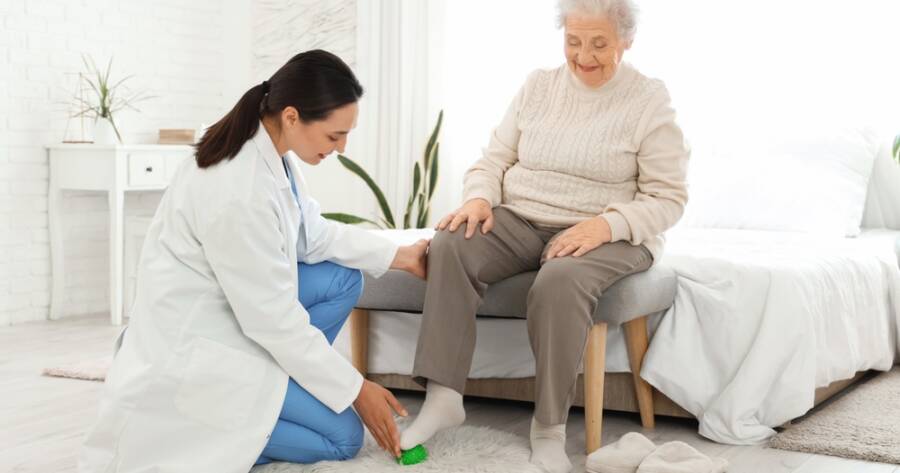
Feet rarely get much attention until something starts to hurt, but caring for them can become more challenging with age. Changes in flexibility, vision, nails, skin, and mobility can turn simple tasks into frustrating ones, while seemingly minor problems may begin interfering with everyday movement. For adults over 60, knowing when professional foot care may help can make routine maintenance much easier.
Why Foot Care Becomes More Critical With Age
As the body ages, the feet undergo changes that make routine maintenance increasingly difficult and increasingly important. Reduced flexibility, diminished circulation, and shifting balance all contribute to a landscape where minor foot issues can quickly spiral into major health setbacks. What begins as an untreated callus or an improperly trimmed nail can evolve into an infection or a mobility-limiting condition that affects daily life for months (source).
Foot conditions affecting older adults carry consequences that extend well beyond discomfort. When the feet hurt or function poorly, the natural response is to move less, and reduced movement accelerates physical decline. Mobility, independence, and overall quality of life are all directly tied to how well the feet are functioning (source). This is why foot care clinics are not a luxury. They are a practical component of healthy aging (source).
The Challenges of Self-Care After 60
Many older adults genuinely want to take care of their feet but face real physical barriers that make independent foot care unsafe or ineffective. Bending to reach the feet requires flexibility that diminishes over time. Seeing clearly enough to trim nails accurately becomes harder with age-related vision changes. For those with arthritis or balance issues, the act of sitting and working at foot level carries its own risks (source).
There is also a knowledge gap that compounds these physical challenges. Research has found that a significant portion of older adults are simply unaware of how much damage improper nail trimming or neglected foot hygiene can cause over time (source). Nails cut at the wrong angle, for example, can lead to painful ingrown toenails. Skin left unchecked can develop cracks that become entry points for infection. For older adults, particularly those living with diabetes, limited circulation, or neuropathy, these outcomes are not merely uncomfortable. They can become genuinely dangerous.
What a Foot Care Clinic Provides
A professional foot care clinic offers far more than basic nail trimming. Trained practitioners assess skin condition, circulation, and structural concerns during every visit. This kind of attentive care creates an opportunity to catch early warning signs of broader health problems before they escalate into emergencies (source).
For adults with chronic conditions, the stakes are especially high. According to Aging Care, “It is never a good idea to have one’s feet worked on by anyone other than a podiatrist if there are any circulatory conditions present, such as diabetes, venous insufficiency, or peripheral artery disease” (source). A foot care professional checks for pulses, evaluates skin integrity, and performs nail care with precision tools and clinical knowledge that a standard salon simply cannot match.
Routine foot assessments also function as a form of preventive screening. Because the feet reflect much of what is happening systemically, with circulation, nerve function, and even bone density, a knowledgeable practitioner can identify patterns worth investigating further (source). Addressing these findings early keeps small issues from becoming large ones (source).
Fall Prevention Starts From the Ground Up
Falls remain one of the most serious threats to the health and independence of older adults, and foot health sits at the center of fall prevention efforts. Pain, instability, or structural foot problems can subtly alter the way a person walks, and those alterations increase fall risk significantly. Regular foot checks are recommended as a frontline preventive strategy for adults over 60 precisely because of this connection (source).
Clinics focused on older adults understand this dynamic and incorporate it into their care approach. Nail length, footwear fit, skin integrity, and sensory response are all evaluated with fall prevention in mind. The goal is not just to address what hurts today — it is to reduce the risk of something far more serious tomorrow.
Professional Nail Trimming: More Than Cosmetic Maintenance
Nail trimming may seem like a simple task, but for adults over 60, it is one of the highest-value services a foot care clinic provides. Thickened nails, which become more common with age, fungal exposure, or poor circulation, can be difficult and even painful to trim without the right tools and technique. Improper trimming creates sharp edges that press into surrounding tissue, causes discomfort while walking, and opens the door to infection (source).
A trained foot care professional handles nails that would be impossible for many older adults to manage on their own. The process is performed in a controlled, sanitary environment with instruments appropriate to the patient’s specific condition. For those whose nail health is connected to systemic conditions, this care is not optional — it is essential. A podiatrist should always check for pedal pulse and skin integrity during nail trimming visits for older patients (source).
Why You Should Learn More About Foot Care Clinics Today
Foot care clinics designed for adults over 60 address a genuine and often overlooked health need. Routine nail trimming, skin evaluations, and circulation assessments combine to form a foundation of care that protects mobility, reduces fall risk, and supports overall wellness.
For older adults managing chronic conditions, or those who simply cannot safely perform foot care independently, professional foot care represents one of the most practical investments in long-term health available. The feet carry the full weight of a person’s daily life; giving them the attention they deserve at a dedicated clinic is a straightforward step toward staying active, independent, and well for years to come.